If you are searching for a North Bay Road waterfront home, the biggest mistake is treating the street like one simple market. It is not. Different blocks can offer a very different mix of traffic, privacy, dock potential, and long-term upkeep considerations.
For a buyer, that can feel exciting and overwhelming at the same time. The good news is that a clear framework can help you compare homes with more confidence and less guesswork. In this guide, you will learn how to evaluate North Bay Road by segment, waterfront type, lot geometry, and resilience factors so you can focus on the right opportunity for your goals. Let’s dive in.
Start With North Bay Road Segments
North Bay Road works best when you think of it as several micro-markets rather than one continuous waterfront corridor. Miami Beach neighborhood materials separate the area into Lower, Middle, and Upper North Bay Road, and city GIS materials also treat them as separate sub-neighborhoods.
That matters because each segment can feel different in daily life. A home’s address may carry the same street name, but your experience of access, traffic flow, and privacy can shift meaningfully from one section to another.
Lower North Bay Road
City materials define Lower North Bay Road in slightly different ways depending on the use case, but the lower stretch generally covers the southern portion of the corridor. A 2025 city transportation memo looked at this area closely because of cut-through traffic concerns.
For you, that makes Lower North Bay Road a location to study carefully if daily traffic patterns matter. It can still offer excellent waterfront opportunities, but you will want to weigh access and activity levels against your preference for a quieter setting.
Middle North Bay Road
Middle North Bay Road often sits in the middle ground, both geographically and practically. City records also show this segment has been part of drainage improvement discussions tied to low stormwater service concerns and resident complaints.
If you are comparing homes here, it helps to look beyond the architecture and view. You should also understand the property’s drainage history and any nearby public works context that could affect convenience or future planning.
Upper North Bay Road
Upper North Bay Road tends to appeal to buyers who want a more insulated feel along the corridor. The same 2025 city memo found minimal weekday afternoon left-turn demand from northbound Alton Road into the upper stretch, which is a useful sign that traffic pressure may feel lower there.
That does not automatically make every upper-segment property the right fit. It simply means this section may better suit buyers who prioritize a quieter street experience without leaving the broader North Bay Road setting.
Look Beyond the Street Name
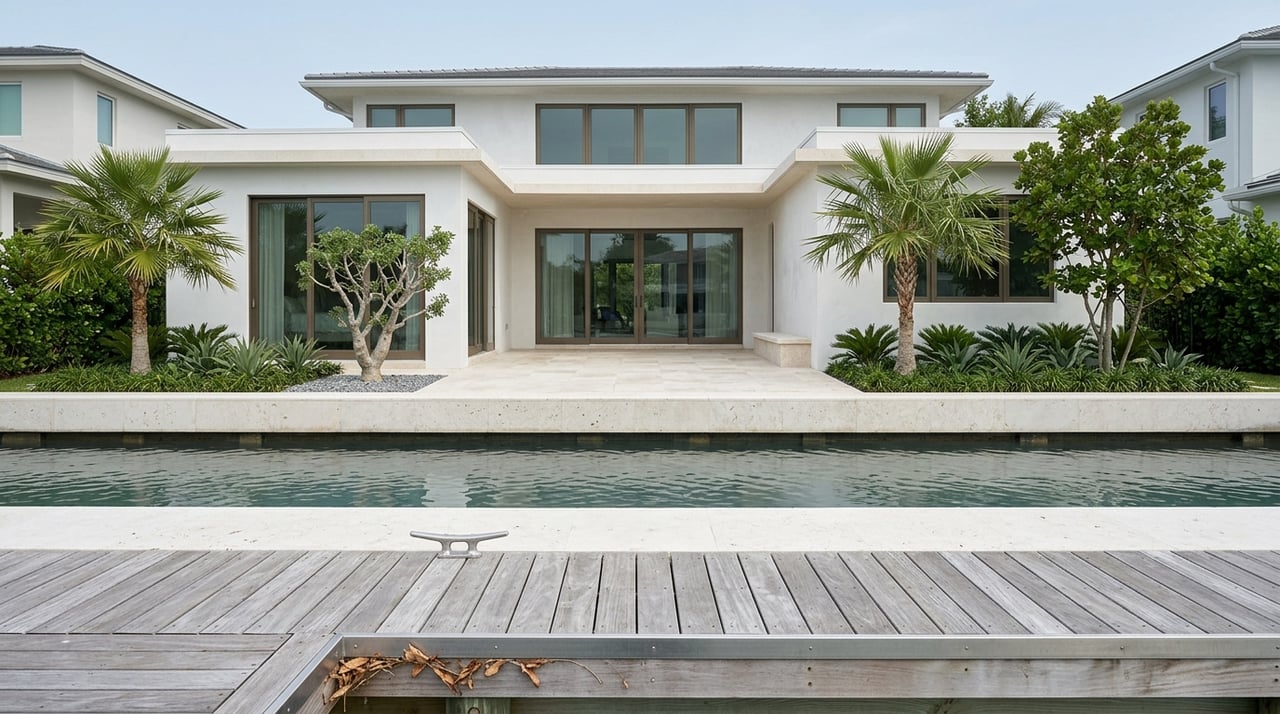
On North Bay Road, the real differences in value usually come from the actual waterfront experience, not just the address. Some properties are true bayfront lots, and that distinction can shape everything from views to dock utility.
In practice, you should ask a more precise question than “Is it on North Bay Road?” A better question is: What kind of water frontage does this specific parcel offer, and how usable is it for the way you want to live?
Bayfront vs. More Sheltered Waterfront
A broad bay orientation can create a striking sense of openness. For many buyers, that is a major part of the appeal.
At the same time, a more sheltered waterfront setting may work better for a different boating setup or day-to-day outdoor use. The right choice depends on how you balance view, exposure, and functional water access.
Dock Potential Matters
Miami Beach marine code says certain residential docks and similar structures extending into Biscayne Bay or another waterway more than 1,000 feet wide may extend no more than 125 feet, subject to state and county review. The code also requires lighting for docks or piers that extend 20 feet or more.
That means you should not assume a property can support your intended dock plan just because it is waterfront. Water width, seawall position, and permit feasibility all matter, especially if vessel size, maneuvering space, or dock design are part of your purchase decision.
Lot Size and Shape Can Change Everything
Two North Bay Road homes can look comparable online and perform very differently in real life because of lot geometry. Depth, width, and shape affect what you can build, how the rear yard functions, and how comfortably a home fits the site.
City design-review records make this clear. In one North Bay Road case, staff noted a lot depth of 100 feet, which was shallower than many RS-4 lots described at roughly 105 to 115 feet deep, and said that limited depth created practical design difficulty.
Why Lot Depth Matters
A shallower lot can reduce flexibility. It may affect setbacks, the building envelope, yard usability, and how naturally indoor and outdoor spaces connect.
If you are buying for long-term enjoyment or future redevelopment, lot depth deserves close review. It is not just a technical detail. It can directly affect how the property lives and what options remain available over time.
Width and Irregular Shape
Width matters too, especially on waterfront homes where rear-yard function and dock alignment may influence value. In one city case, the lot had an irregular width of 60 feet at the front and 75 feet at the rear, which added complexity.
Irregular lots are not necessarily a drawback. But they do require more careful analysis so you understand whether the shape supports your goals as smoothly as a more standard parcel would.
Flood Risk Should Be Part of Your First Review
On Miami Beach waterfront property, flood and resilience issues should not be an afterthought. The city states that its low elevation makes it vulnerable to storms, sea level rise, heavy rainfall, high tides, and storm surge.
The city also says that under current FEMA maps, 93% of all buildings are in the Special Flood Hazard Area. For North Bay Road buyers, that makes flood zone review and mitigation planning part of basic due diligence.
Seawall Condition Is a Core Value Driver
Miami Beach flood rules state that seawall improvements must meet standards that account for future tidal flood conditions and coastal water levels predicted with sea level rise, using regional projections adopted by the city.
That is why seawall height, maintenance, and upgrade status matter so much. These are not cosmetic items. They can influence long-term ownership costs, resilience, and the future marketability of the home.
Drainage History Counts Too
North Bay Road has been part of city resilience and drainage work for years. City notices and mitigation records reference storm drainage projects and improvements across Lower, Middle, and Upper North Bay Road.
For you, that means a beautiful home should also be reviewed in context. Ask how the property sits relative to past or active public works activity, and whether drainage history could affect your ownership experience.
Compare North Bay Road to Other Waterfront Options
North Bay Road fills a specific niche in Miami Beach. It is a segmented, street-based waterfront market with direct bay orientation and varied lot scale.
That is different from Miami Beach island settings, where the neighborhood structure can feel more self-contained. It is also different from other waterfront corridors where public infrastructure and streetscape conditions shape the experience in their own way.
Island Corridors
Venetian Islands, Sunset Islands, and Palm and Hibiscus Islands each have their own site logic and active infrastructure context. Based on city project records, these areas can appeal to buyers who prefer a more enclosed or island-oriented residential setting.
If your priority is a classic Miami Beach waterfront street with block-by-block variation, North Bay Road may stand out. If you want a more uniform island feel, another waterfront location may prove a better match.
Other Waterfront Benchmarks
West Avenue, Bay Road, and Indian Creek Drive are also useful comparison points because they operate differently as waterfront environments. City records show major resilience and infrastructure work in these areas as well, including road elevation and seawall-focused projects.
The key is not deciding which corridor is universally best. It is identifying which location aligns most closely with your preferred mix of setting, access, and long-term ownership considerations.
A Smart Buyer Checklist for North Bay Road
When you are narrowing down North Bay Road waterfront homes, a disciplined checklist can save time and reduce risk. The most important questions tend to be practical rather than cosmetic.
Use this framework as a starting point:
- Which segment is the home in: Lower, Middle, or Upper North Bay Road?
- Is the property true bayfront or a more sheltered waterfront setting?
- What are the exact lot depth, width, and overall shape?
- Is a dock feasible under current code and site conditions?
- What is the condition and elevation status of the seawall?
- What is the flood zone and known drainage history?
- Are there nearby traffic or public works issues that could affect daily use?
A home that checks these boxes well may offer stronger long-term satisfaction than one that wins on finish or staging alone. On North Bay Road, the most important differences are often the ones you cannot fully see in listing photos.
The Right Home Is the Right Fit
Choosing the right North Bay Road waterfront home is rarely about finding the most impressive address on paper. It is about matching the correct segment, lot, waterfront condition, and resilience profile to the way you actually want to live.
That is especially true in a market where small site details can have an outsized effect on privacy, boating utility, and long-term value. A disciplined review helps you avoid broad assumptions and focus on the homes that truly fit your priorities.
If you are considering a purchase on North Bay Road, the right guidance should go beyond a standard showing. The Corcoran Group offers senior-led insight, rigorous waterfront due diligence, and a discreet, tailored approach to helping you evaluate high-value opportunities with confidence.
FAQs
What makes North Bay Road different from other Miami Beach waterfront areas?
- North Bay Road is a segmented street-based waterfront market, not one uniform neighborhood, so homes can vary significantly by block in traffic, privacy, lot scale, and waterfront utility.
How should you evaluate a North Bay Road waterfront lot?
- You should verify the lot’s exact depth, width, and shape because those details can affect design flexibility, rear-yard use, setbacks, and dock planning.
Why does flood risk matter for North Bay Road homes?
- Miami Beach states that its low elevation makes it vulnerable to storms, heavy rainfall, high tides, storm surge, and sea level rise, so flood zone, drainage, and mitigation status are central to ownership planning.
What should you check about a seawall on North Bay Road?
- You should review the seawall’s condition, height, maintenance history, and whether improvements align with current Miami Beach standards that account for future tidal flooding and sea level rise.
Can every North Bay Road waterfront home support a dock?
- No, dock feasibility depends on site conditions and code requirements, including water width, seawall position, and the rules that apply to residential structures extending into the water.
Which North Bay Road segment may feel quieter?
- City transportation analysis suggests the upper stretch may experience less traffic pressure than the lower stretch, which can make it more appealing if you value a quieter street setting.