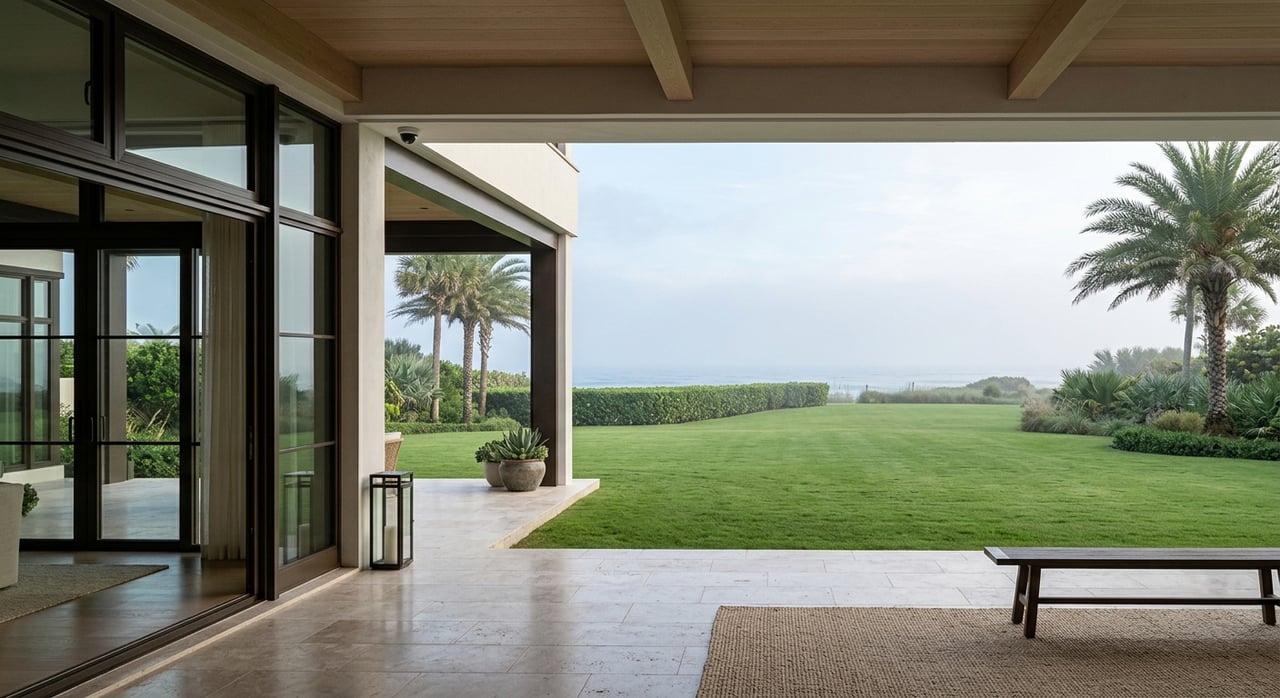
If you are looking for one of the most private residential addresses in Miami-Dade, Indian Creek stands apart almost immediately. This is not simply a gated island with impressive homes. It is a self-contained village built around scarcity, controlled access, and a golf-club-centered lifestyle. If you want to understand why Indian Creek remains such a rarefied market, this guide will walk you through what makes it different. Let’s dive in.
What makes Indian Creek different
Indian Creek is a 0.46-square-mile barrier island connected to Surfside by a village-owned bridge and private roadway. The village describes the island as a municipality with residential, recreational, and public uses, which gives it a very different structure from a typical private community.
That distinction matters. Indian Creek is its own village with its own police department, bridge, and land-use framework. For buyers focused on privacy, security, and long-term scarcity, that municipal control is a major part of the appeal.
Why scarcity drives value
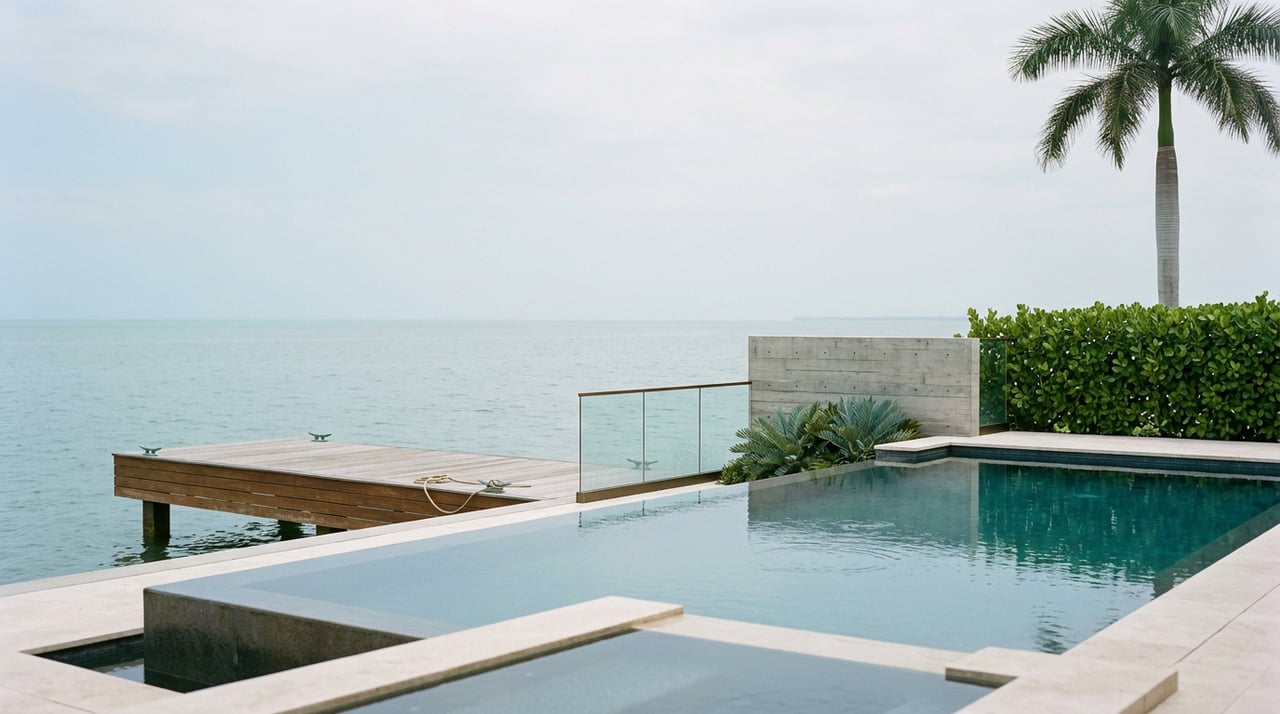
One of the clearest reasons Indian Creek attracts ultra-prime attention is its extremely limited supply. Official village materials describe 41 platted waterfront residential home sites, with the center of the island occupied by Indian Creek Country Club.
The village’s 2025 Comprehensive Plan makes the limits even more explicit. It says there is no commercial, industrial, or multifamily development on the island, and it sets a policy limit of no more than 41 single-family primary dwelling units. In other words, supply is intentionally capped by land-use policy, not just market conditions.
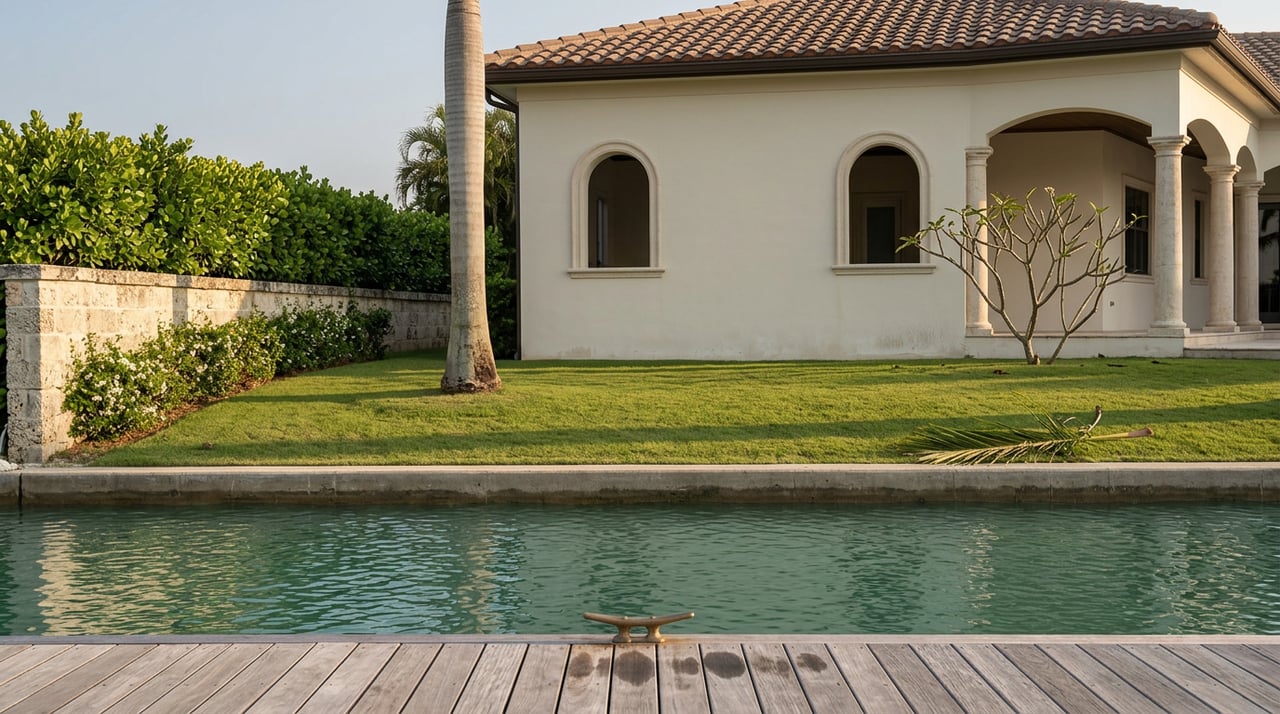
Every residential lot also has water frontage, according to the same plan. That means the housing stock is not a mix of product types or lot conditions. It is a tightly controlled collection of waterfront estates.
Indian Creek as a waterfront municipality
Indian Creek is best understood as a single-family waterfront municipality rather than a conventional neighborhood. The island was planned around estate-scale residential use, with the country club at its center and no public-facing commercial district.
That structure creates a very specific living experience. You are not buying into a mixed-use luxury village with shops, hotels, and public activity nearby. You are buying into a place designed around residential privacy, controlled access, and a limited number of homes.
The 2025 Comprehensive Plan also notes that the developed component includes 29 waterfront residential estates with 36 owners, while the original plan contemplated 41 platted lots. For buyers and owners alike, that reinforces just how structurally limited the inventory is.
The role of Indian Creek Country Club
At the center of the island is Indian Creek Country Club, which helps define the character of the community. Village materials describe the club as including a clubhouse, members’ golf course, dockage, and assembly, hospitality, and event facilities.
An official village budget document describes the golf course as 6,662 yards. That gives the island a private-club core rather than a standard amenity package.
The club lifestyle extends beyond golf. Official club information also highlights a pool and four Har-Tru courts that were converted to FDC HydroCourts, along with private lessons and seasonal programming. For many buyers, that makes Indian Creek feel less like a neighborhood and more like a private residential compound centered on club life.
Why privacy is so durable here
Privacy in Indian Creek is not just a matter of reputation. It is supported by the way the village is physically and administratively organized.
Ingress and egress occur through Indian Creek Bridge, which the village owns and maintains. The 2025 Comprehensive Plan also notes that the bridge works together with the island’s private roadway and that the village continuously monitors traffic ingress.
The island’s land-use framework adds another layer. With no commercial or multifamily development and no public rights-of-way on the island, there is very little reason for outside traffic or casual pass-through activity. That helps explain why privacy here tends to feel more durable than in many other luxury enclaves.
Security and access control
Indian Creek operates its own Public Safety Department. The department’s mission emphasizes security, safety, and quality service for residents and visitors.
That local control is notable in a community of this size. It supports the broader feeling that Indian Creek is designed to function with a high degree of oversight and managed access.
For buyers comparing elite island addresses, this setup is often part of the conversation. Indian Creek’s one-bridge access pattern, village-controlled infrastructure, and local public safety presence create a security model that is closely tied to the island’s layout.
What the lifestyle actually feels like
Indian Creek is not trying to be everything at once. Its appeal is narrower and more intentional than many luxury destinations in South Florida.
The island offers a golf-club-centered lifestyle in a highly controlled residential setting. If your priority is broad public amenities, walkable retail, or a more active village atmosphere, Indian Creek may feel too inwardly focused.
If your priority is waterfront estate living with a strong sense of separation from the surrounding market, that same focus is exactly what makes it compelling. The combination of water frontage, limited homes, managed access, and a private club core gives the island a distinctly self-contained character.
How Indian Creek compares nearby
Indian Creek vs. La Gorce Island
La Gorce Island is one of the closest comparisons because it also offers an island identity and a private residential feel. But city materials place it within Miami Beach’s broader neighborhood association framework, and planning materials show it connected by multiple bridges and major north-south routes.
That does not make La Gorce Island less prestigious. It simply suggests that Indian Creek is more structurally isolated because of its municipal setup, one-bridge access pattern, and more tightly controlled physical framework.
Indian Creek vs. Bal Harbour
Bal Harbour is different in both scale and function. Official village materials describe Bal Harbour as a one-square-mile luxury village with high-end shopping, hotels, dining, and a nearly private beach, with just under 3,500 permanent residents in 2022.
That makes Bal Harbour a far more public-facing luxury destination. It offers a broader amenity mix, while Indian Creek remains much more purely residential in form and feel.
The cleanest positioning
If you are comparing these three markets at a high level, the distinctions are fairly clear. Indian Creek is the most self-contained. La Gorce Island is the closest peer for privacy and island identity. Bal Harbour is the most internationally recognized luxury village of the group, but also the least purely residential.
What buyers should keep in mind
For a buyer, Indian Creek is less about amenity volume and more about protected scarcity. The value proposition comes from a few specific features working together:
- A standalone municipality
- A village-owned bridge and private roadway
- A policy framework centered on single-family use
- No commercial, industrial, or multifamily development
- Waterfront residential lots throughout the island
- A private country club at the center of the community
Those elements are difficult to replicate elsewhere. That is why Indian Creek tends to attract buyers who are looking for long-term privacy and a very controlled residential setting rather than a broader lifestyle district.
Why Indian Creek remains ultra-prime
In many luxury markets, exclusivity can change over time as nearby development intensifies. Indian Creek is different because its scarcity is embedded in the village’s structure.
The housing cap, the single-family-only theme, the one-bridge access pattern, and the absence of public rights-of-way all help preserve its identity. For buyers, sellers, and investors watching South Florida’s top waterfront markets, that kind of built-in limitation is a major part of why Indian Creek remains so closely watched.
When you evaluate Indian Creek through that lens, the appeal becomes clearer. This is not just a prestigious address. It is a highly controlled waterfront municipality with unusually limited supply and a private-club core that reinforces its long-term positioning.
If you are considering buying or selling in Indian Creek or comparing Miami Beach’s top island markets, senior guidance matters. The Corcoran Group offers discreet, high-level representation backed by deep waterfront expertise, rigorous due diligence, and a tailored approach to ultra-prime real estate.
FAQs
What is Indian Creek in Miami-Dade County?
- Indian Creek is a self-contained village on a 0.46-square-mile barrier island connected to Surfside by a village-owned bridge and private roadway, with residential, recreational, and public uses.
How many homes are allowed in Indian Creek?
- The village’s 2025 Comprehensive Plan sets a policy limit of no more than 41 single-family primary dwelling units.
Are all homes in Indian Creek waterfront properties?
- Yes. The 2025 Comprehensive Plan states that every residential lot on the island has water frontage.
What amenities are part of Indian Creek Country Club?
- Official materials describe the club as including a clubhouse, members’ golf course, dockage, hospitality and event facilities, plus a pool and four tennis courts converted to FDC HydroCourts.
Why is Indian Creek known for privacy?
- Indian Creek’s privacy comes from its one-bridge access pattern, village-owned bridge, private roadway, locally managed public safety, and land-use rules that exclude commercial and multifamily development.
How does Indian Creek compare with Bal Harbour and La Gorce Island?
- Indian Creek is the most self-contained of the three, La Gorce Island is the closest peer for private island living, and Bal Harbour is a more public-facing luxury village with a broader amenity base.