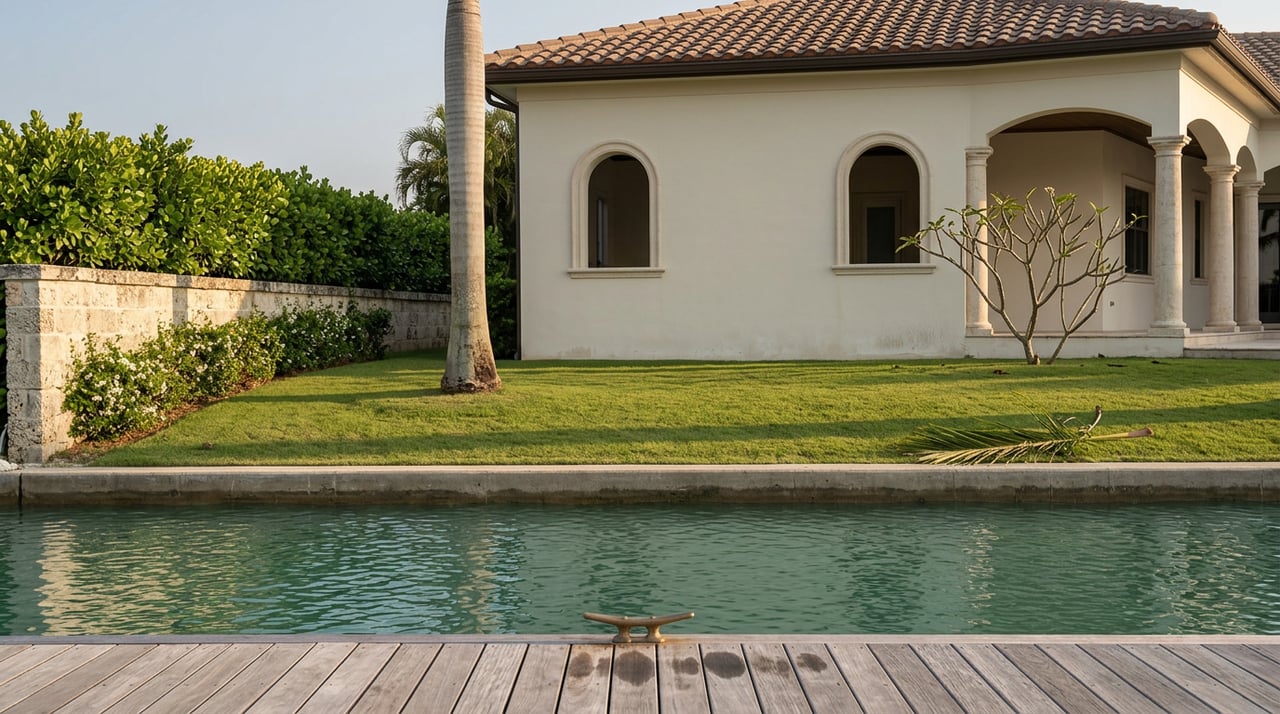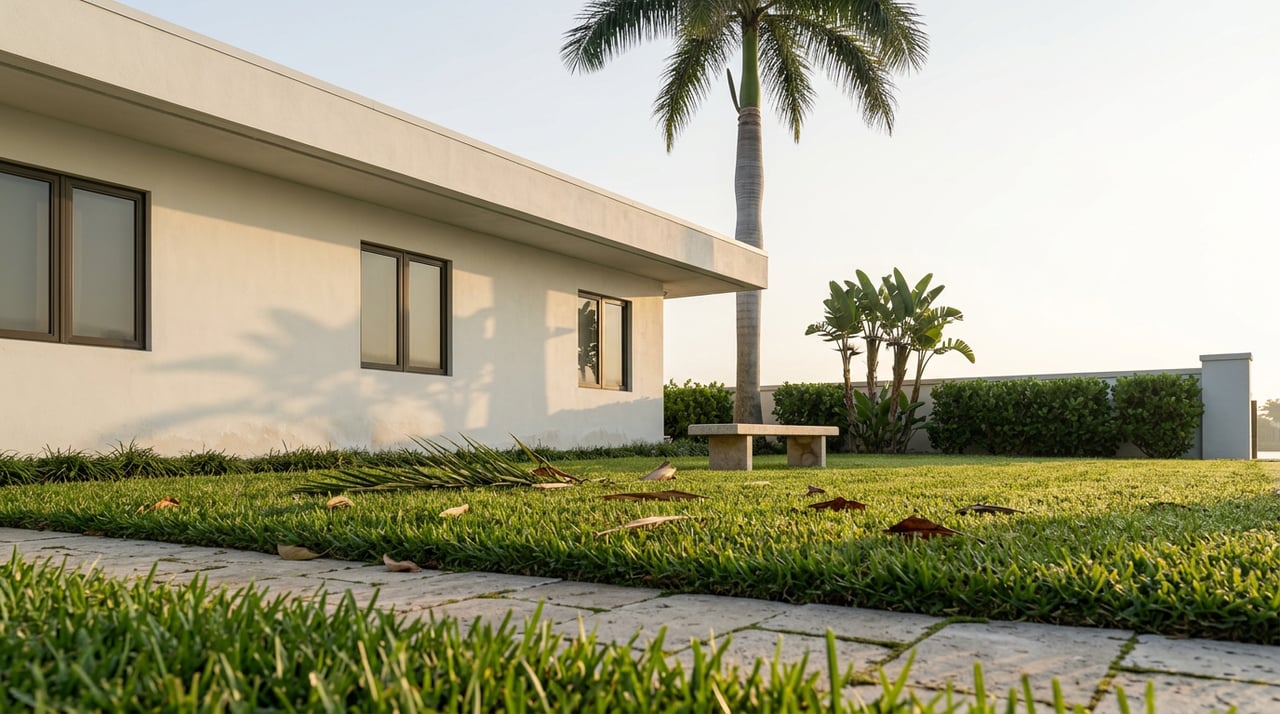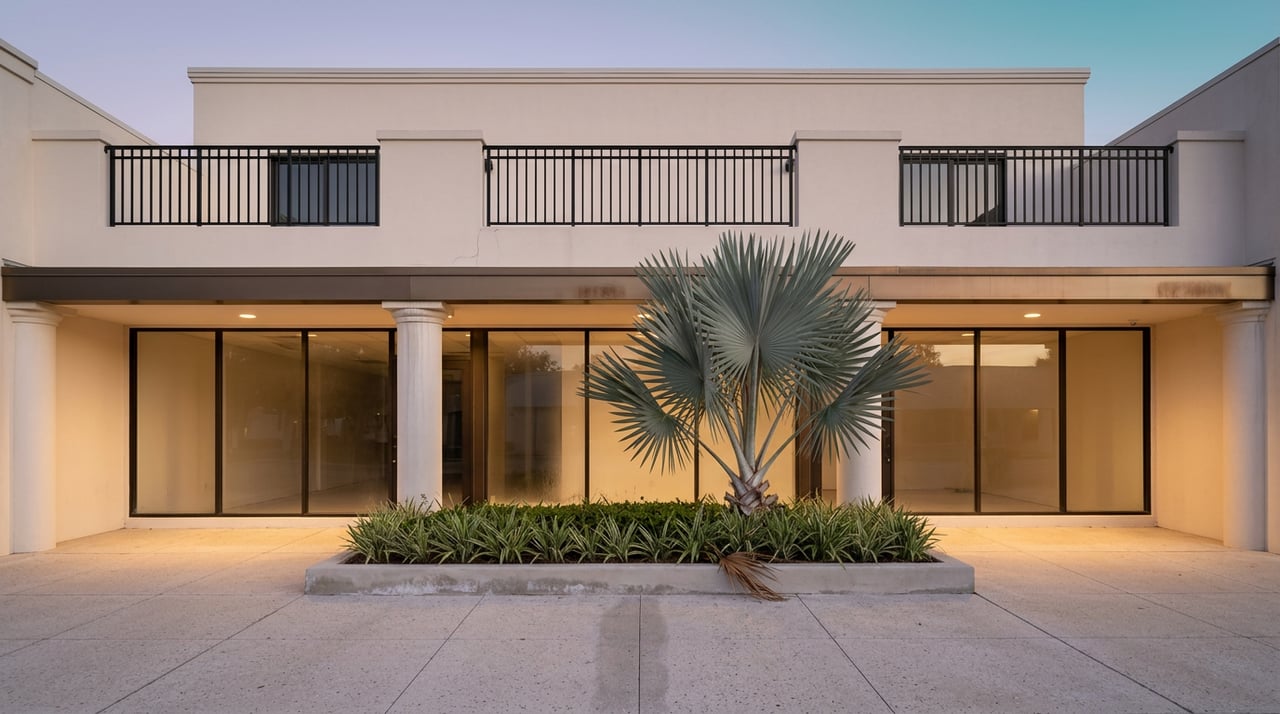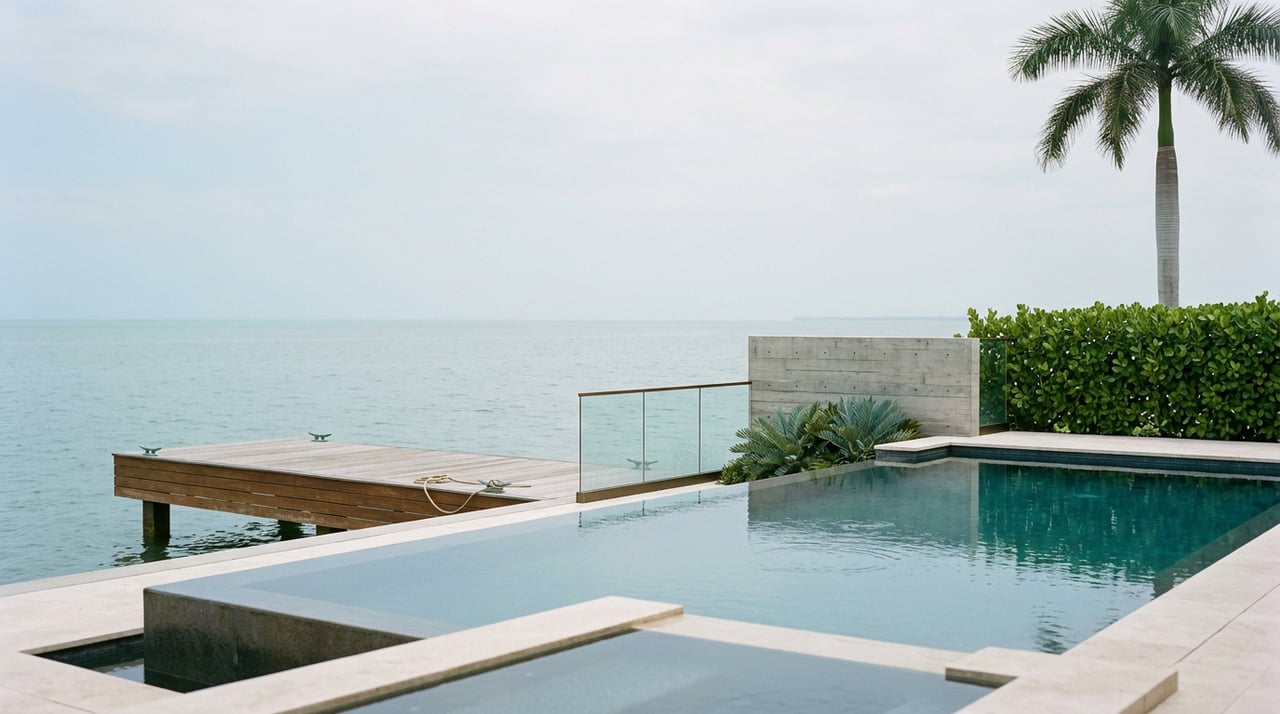
In August 2026, a waterfront estate at 270 S. Hibiscus Drive closed for $51.5 million, the highest price and the highest price per square foot ever recorded on Miami Beach's guard-gated Hibiscus and Palm Islands. The house has a nightclub with its own entrance, laser lighting, and a dedicated air conditioning system built to keep a party cool while the rest of the home sleeps. It has two private docks that together can hold a yacht up to 105 feet. The seller, Luis Bosch of Luis Bosch Luxury Homes, had bought the property as an unfinished shell back in 2021 and spent five years building it into the record it became.
That is the headline. It is also only half the market.
Three Records in Under a Year
The $51.5 million sale did not appear out of nowhere. It capped a sequence that moved fast even by the standards of these two islands. A newly completed spec mansion on Palm Island had briefly held the title of most expensive sale ever on the island, changing hands for roughly $32 million. That record did not last. Chilean developer Claudio Fischer sold another Palm Island spec mansion for close to $40 million, resetting the number again. Then came the Hibiscus Drive sale in August, at $5,800 per square foot, on a smaller footprint than the record it replaced.
Look closely at what each of these three sales has in common. None of them was a resale of an old estate that simply appreciated with the market. Each was a home built or finished within the past several years, sold once, to a buyer paying for construction that had not existed the sale before. The islands' price ceiling right now is not being set by scarcity of address alone. It is being set by whoever finishes the newest, most fully realized spec mansion, and that ceiling keeps moving because builders keep raising the bar on what a finished trophy home on these two islands can include.
That matters for anyone comparing a listing here to a comparable address on Star Island or the Venetian Islands. The number you see in a headline is not a neighborhood average drifting upward. It is closer to a high score, reset by whichever builder ships the most ambitious project next.
The Same Two Islands, a Completely Different Trade
While that spec-construction race plays out on one side of the market, something close to the opposite is happening a few doors down. Earlier this year, a 1952-built home on Hibiscus Island sold for $15 million to a company connected to the Albatul Group, a cosmetics business with operations in Iraq, Dubai, and Canada. The buyers, Riyadh Swedaan and Hashim Abdul Kareem Suwaidan, were not purchasing a house. The price equated to roughly $714 per square foot for the land alone, brokered by Allan Kleer and Fabian Garcia Diaz of One Sotheby's International Realty on the sell side and May Shekouri of Bespoke Miami Realty Group on the buy side. The 1952 house is coming down.
A similar logic showed up in July 2026, when venture capital investor Ben Ling and his husband Chris Coudron paid $40 million for the waterfront property next door to their own Palm Avenue mansion. Ling had bought that first home in 2021 for about $29.5 million. He did not need a second house. He needed the two acres that came with combining both lots under one address, and he paid a record-adjacent price to get it.
Robert Rivani's Palm Island play tells a similar story from a different angle. Rivani paid $23 million for a waterfront estate in November 2025, planning a multimillion-dollar renovation, and by April 2026 had it under contract asking $27.5 million with Dina Goldentayer of Douglas Elliman. He was underwriting the location and the lot, treating the existing house as a placeholder whose value he intended to unlock, not preserve.
None of these three buyers were shopping for what the Hibiscus Drive buyer paid $51.5 million for. They were shopping for what sits under the house.
Why the Split Exists
The reason these two markets can run side by side on the same two islands comes down to something simple: the land itself cannot grow. Palm and Hibiscus Islands were built by the Army Corps of Engineers in the early 1920s, and neither has room to add another lot. Palm Island holds roughly 136 homes on about 82 acres. Hibiscus holds roughly 150 on about 69 acres. Every listing that comes to market is a fixed slice of a supply that will never expand, reachable only by a single bridge off the MacArthur Causeway, behind a guard gate that both islands share.
When new land cannot be created, a builder or a buyer has exactly two ways to create additional value. One is to build a better house on the lot you already have, which is the spec-construction race that produced the $32 million, $40 million, and $51.5 million sales. The other is to acquire more land under a single roofline by buying the lot next door and combining it, which is what Ben Ling did and what the Hibiscus Drive teardown buyers are positioned to do once their new build replaces the 1952 structure.
Both strategies are rational responses to the same constraint. Neither one is really about the house.
What This Means When You're Comparing Listings
If you are touring Palm and Hibiscus Islands against other gated Miami Beach enclaves, the practical takeaway is not to average these two kinds of sales together. A $51.5 million finished trophy home and a $15 million teardown are not on the same axis, even though both sit on Hibiscus Island and both will appear in the same neighborhood search. The first is priced on architecture, craftsmanship, and how recently it was completed. The second is priced on lot size, water frontage, and how much of the current structure a buyer plans to keep.
That distinction should shape the questions you ask before an offer. Is the home you are considering the newest thing on the block, competing to be the next record, or is it aging stock whose real value is the dirt underneath it? On islands where access runs through one shared gate and the combined homeowners association covering Star, Palm, and Hibiscus is voluntary rather than mandatory, at roughly $500 a year, due diligence has to be done house by house rather than assumed from a neighborhood average. That is exactly the kind of onsite inspection and lot-by-lot analysis that matters more here than the headline price per square foot.
Frequently Asked Questions
Does a higher price per square foot on Hibiscus Island mean the land is worth more than comparable Palm Island lots? Not necessarily. The Hibiscus Drive record reflects a finished, newly built home with a nightclub, twin docks, and other features unlikely to repeat on the next lot. Land value on both islands is driven more by water frontage, lot combination potential, and orientation than by whichever number topped headlines most recently.
If the homeowners association is voluntary, what actually maintains shared spaces on the islands? The combined Star, Palm, and Hibiscus association handles shared landscaping and the community park with basketball and tennis courts through voluntary member dues. Because participation is not mandatory, buyers should confirm current dues and services directly rather than assuming coverage matches a typical mandatory HOA.
Is it common for buyers here to purchase a home with plans to demolish it? Yes. Given the fixed number of lots on both islands, and construction era ranging back to the 1920s and 1950s for some homes, buying to rebuild is one of the two primary strategies active in this market right now, alongside acquiring a recently finished spec home outright.
If you are comparing Palm and Hibiscus Islands to another waterfront address in Miami Beach and want to know which side of this market a specific listing sits on, the Julian Johnston Team can walk the lot with you before you write an offer. Schedule a private consultation to talk through what a given address is actually worth, house and land considered separately.