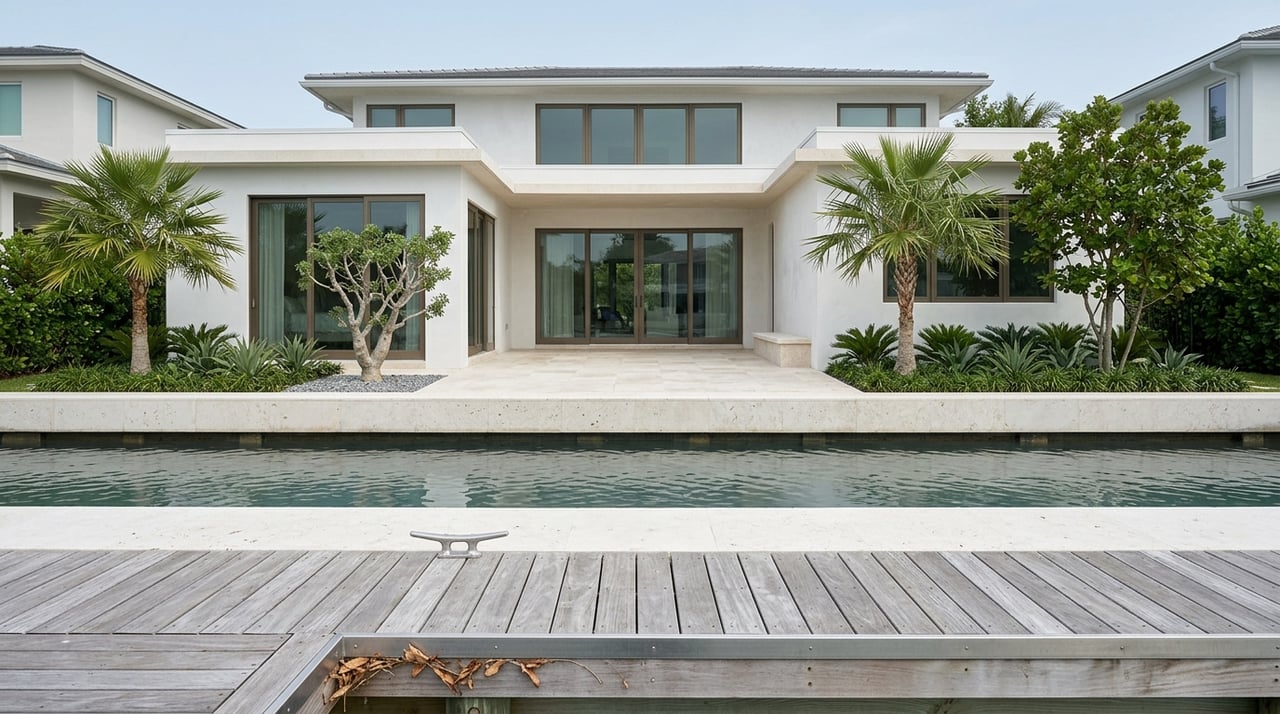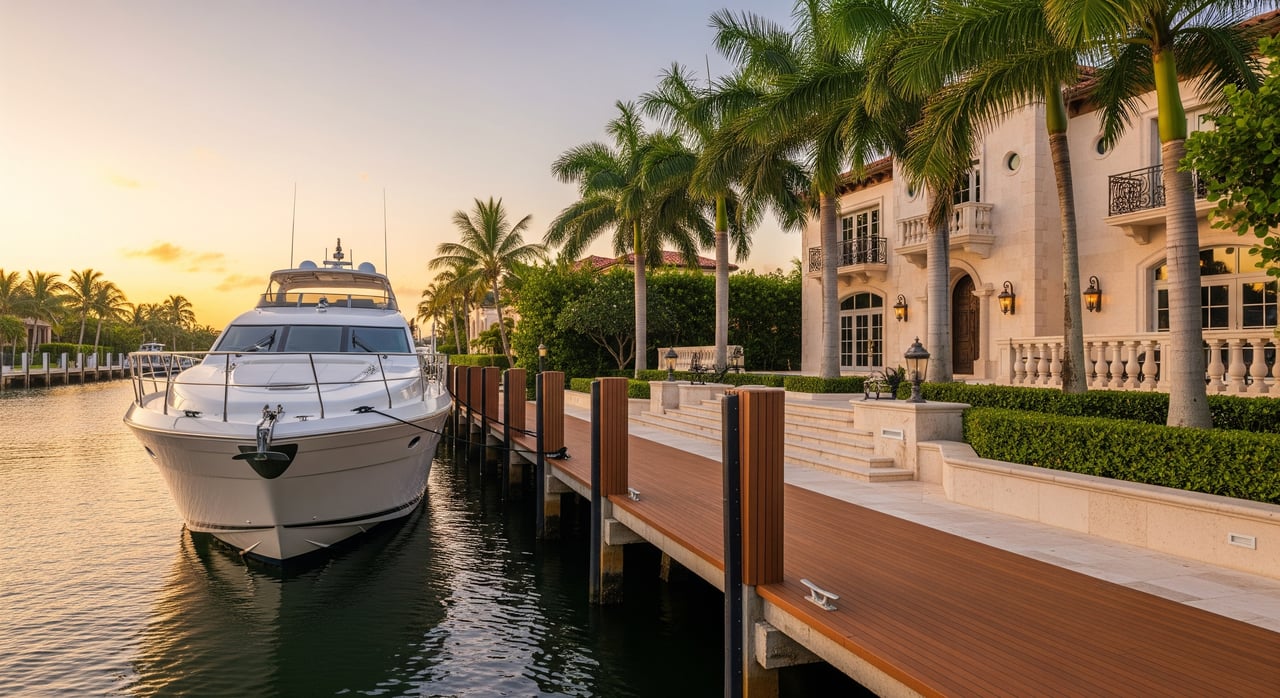
Is your ideal Miami Beach home one where the dock works as hard as the house? If boating is central to your lifestyle, not all waterfront addresses are equal. Depth at your dock, room to turn, daily wind exposure, and run time to the ocean all shape how enjoyable your time on the water will be. This guide compares Sunset Islands and La Gorce Island so you can choose the best fit for your vessel and the way you cruise. Let’s dive in.
Where these islands sit
Both Sunset Islands and La Gorce Island are inside Biscayne Bay, protected between Miami Beach and the mainland. From either island, you navigate neighborhood waters to a marked bay channel, then head to the Atlantic via Haulover Inlet to the north or Government Cut by the Port of Miami to the south and east. Day to day, your exact route depends on your vessel’s draft and air draft, and where your dock sits on the island.
Because most of the bay outside dredged channels is shallow, your comfort on the water comes down to how you move from your dock to a maintained channel. Private docks, seawalls, lateral marks, and local shoals are key chart features to review for any property you are considering.
Channel width and depth
Channel geometry affects passing room, maneuvering, and safety margin if a gust or current nudges you off line. Depth at mean low water determines what you can safely run without touching bottom.
Sunset Islands: neighborhood channels
On Sunset Islands, many lots back onto smaller, curving neighborhood channels that feed into wider bay channels. These lanes can feel intimate and quiet, with short runs to protected water, but the geometry varies block by block. You will want to confirm depth at mean low water at the dock and along the route to the nearest marked channel, and check for any seasonal shoaling or seagrass that narrows effective width.
A practical rule is to target vessel draft plus at least two feet as your minimum under-keel clearance at mean low water. Two-way passing is common in these channels, so measure horizontal clearance and plan speeds accordingly. The small tidal range in South Florida, often about one to two feet, means dredge depth and shoaling matter more than tide swings for most recreational drafts.
La Gorce Island: more open bay frontage
Many La Gorce Island properties front the open bay, which can offer broader water immediately off the dock compared with canal-like settings. That often means more visual space and a more forgiving margin when easing in and out. Still, suitability is property specific. Depths, nearby shoal patches, and exact dock orientation will vary around the island, and some parcels sit near narrower neighborhood waters before reaching the main bay.
How to verify for your boat
- Confirm depth at mean low water at the dock and along the route to the nearest maintained channel. Aim for draft plus two feet or more.
- Measure channel width where you expect to pass other boats. Check clearances between fixed objects, including pilings and seawalls.
- Note any submerged obstructions, seagrass beds, or recent shoaling reports that reduce usable depth.
- Use official nautical charts for depths and aids to navigation, and check recent maintenance or dredging records for accuracy.
Turning room and docking setups
Turning basins and maneuvering space determine how comfortably you can handle your vessel when wind pipes up or guests are on board. The larger the boat, the more room you will want.
Why turning basins matter
As a general guide, plan for a turning diameter of about 1.5 to 2 times your vessel’s length overall in calm conditions. Larger or heavier yachts may require 2 to 3 times LOA, especially if wind or current is on the beam. Side-tie docks on narrower channels require more caution and room to offset prop wash and drift.
Sunset vs La Gorce in practice
- Sunset Islands: Where docks sit on smaller, curving channels, turning space can be tighter. Many owners manage this comfortably with technique and timing, but it places a premium on local knowledge and situational awareness.
- La Gorce Island: Parcels with direct open bay frontage often provide wider immediate maneuvering areas, which can feel more forgiving for larger boats. That said, parcels tucked off narrower approaches can be more constrained. Always evaluate the exact dock location.
What to measure at the dock
- Berth length and width that match your LOA and beam.
- Depth at the berth at mean low water, including any shoaling near the face dock or pilings.
- Dock configuration: side-tie, T-dock, fixed pier, and the length of finger piers.
- The nearest widening or turning basin, and its approximate diameter relative to your vessel.
Exposure at the dock
Dock comfort is shaped by wind, chop, and surge. In South Florida, easterly and southeasterly winds are common, while winter fronts can bring northerly gusts. Tidal currents are generally modest inside the bay, but they increase near inlets and pinch points.
- East or southeast facing docks that open to wider water can see more chop during onshore breezes.
- West-facing docks tend to be more sheltered but may be in shallower water.
- Storm surge and hurricane waves can overtop low seawalls and docks. Seawall height, dock construction, and hurricane mooring practices are important risk controls.
Island nuances to consider
La Gorce Island’s open bay edges can experience more wave action during windy periods, depending on orientation and fetch. Many Sunset Islands docks, tucked along smaller channels, often feel more protected day to day, though confined waters can create tricky crosswinds or eddies when maneuvering. The best approach is to evaluate each dock’s aspect to prevailing wind and the amount of open water upwind.
Ocean access and transit time
Your two primary Atlantic routes are Haulover Inlet to the north and Government Cut by the Port of Miami to the south and east. Both inlets are accessible from either island via marked bay channels. Haulover often sees abundant recreational traffic. Government Cut carries commercial ships and requires extra vigilance as you approach.
To estimate a run, measure the nautical miles along navigable water from your dock to the inlet, accounting for slow zones. Then divide by your typical cruising speed. For example, a planing cruiser at 20 to 25 knots will cover bay miles quickly in fair conditions, while a trawler will take longer. Conditions at both inlets can change with weather and shoaling, so local knowledge is essential.
Buyer checklist for boat-friendly homes
Use this quick checklist to compare specific parcels on Sunset Islands and La Gorce Island:
- Depth and clearance
- Depth at the dock and along the route at mean low water that supports draft plus a safety margin.
- Horizontal clearances in the local channel and between fixed structures for safe passing.
- Maneuvering and dock fit
- Turning space near the dock of 1.5 to 2 times LOA or more, depending on vessel type.
- Berth length, width, and dock configuration that match your vessel.
- Exposure and protection
- Dock orientation relative to prevailing easterly or northerly winds.
- Seawall height and dock design that mitigate surge and chop.
- Route planning
- Distance in nautical miles to Haulover Inlet and Government Cut along navigable channels.
- Known slow zones and traffic considerations near the Port of Miami.
- Permits and rules
- Existing permits for docks, seawalls, and any prior dredging.
- HOA covenants on vessel size, lifts, noise hours, or charter activity.
- Services and resilience
- Proximity to fuel, pump-out, marine mechanics, haul-out, and chandlery.
- Insurance requirements, hurricane plans, and access to haul-out or dry storage when storms approach.
- Due diligence
- A marine survey of the dock, pilings, and utilities.
- Verification of depths and authorized channel dimensions using official sources.
How to get authoritative data
For precise, property-specific answers, rely on the following:
- Official nautical charts showing depths, soundings, and aids to navigation for Biscayne Bay.
- U.S. Army Corps of Engineers records for authorized dredge depths and maintenance updates.
- U.S. Coast Guard notices for aids to navigation and local advisories.
- City of Miami Beach and Miami-Dade County marine or public works for neighborhood channel maintenance and permits.
- Florida Department of Environmental Protection and the Florida Fish and Wildlife Conservation Commission for environmental and dock permitting.
- Local marinas, yacht clubs, and marina managers for current insights on shoaling, service availability, and transit norms.
Which island is better for boaters
Both Sunset Islands and La Gorce Island can be excellent for boaters. The better fit depends on your vessel type and how you use it. If you favor quiet, protected waters right off the dock and you run a mid-size boat that fits neighborhood channels, certain Sunset Islands addresses can feel effortless. If you prefer broader maneuvering water off your dock or plan to berth a larger yacht, select La Gorce Island properties with open bay frontage may suit you better.
The right choice is the one that matches your draft, LOA, and routine. Start with depth and turning room at the dock, then confirm your route to a maintained channel and to the inlet you plan to use most. With those boxes checked, both islands deliver the Miami Beach boating lifestyle at a very high level.
Ready to compare specific docks and routes with confidence? For a private, data-driven consultation on Sunset Islands and La Gorce Island waterfronts, connect with the senior-led team at The Corcoran Group.
FAQs
What are the main boating differences between Sunset Islands and La Gorce Island
- Sunset Islands often feature narrower, curving neighborhood channels that feel protected, while many La Gorce Island parcels front more open bay water that can offer broader maneuvering space.
How do I estimate inlet transit time from these islands
- Measure nautical miles along navigable channels from the dock to Haulover or Government Cut, account for slow zones, then divide by your normal cruising speed to estimate time.
Can I dock a 60 to 80 foot yacht on these islands
- It depends on berth length, depth at mean low water, turning room, and local rules; verify with charts, permits, and a marine survey for the exact parcel.
Are docks on these islands exposed to heavy chop or surge
- Exposure depends on orientation and fetch; open bay faces can see more wind chop and surge during onshore winds, while canal-like settings tend to feel more sheltered.
Where can I find verified depth and channel data for a specific property
- Use official nautical charts, U.S. Army Corps of Engineers records, U.S. Coast Guard notices, and City or County marine departments, and confirm with a marine survey.